It’s like the wolves.
Evil and Good.
Which do you feed?
This is how you choose your future.
It’s not luck, your future is created by who you are.
This is why we need to be Born Again, cleansed of the toxic past, so that the future is Blessed by our good decent rational choices.
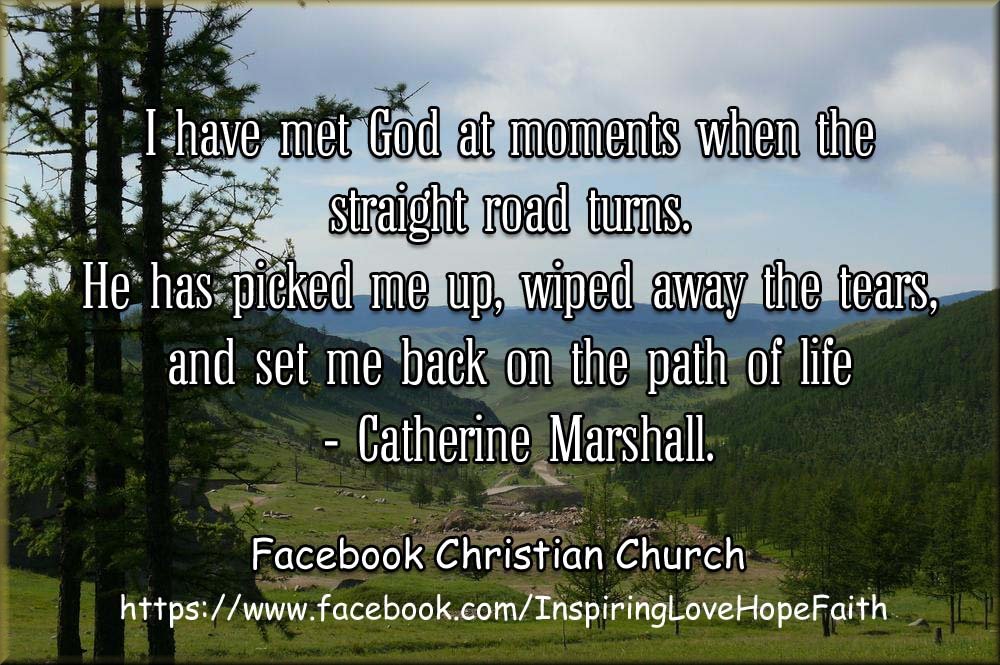
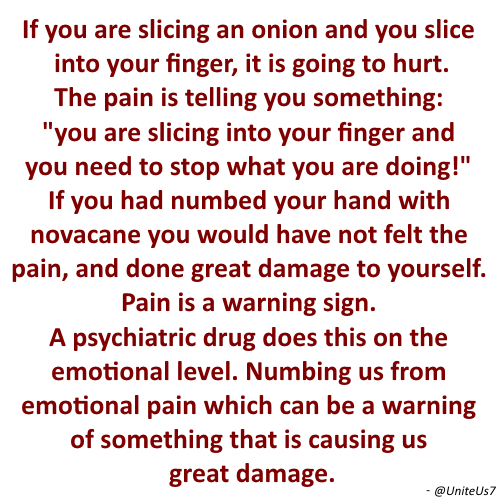
The mental health drugs that they give you dumb down your mind so that you cannot think for yourself, they also numb the spiritual heart so you cannot feel who you really love, or even feel love.
The drugs numb your mind so much so, that you cannot recognize evil when it is right in front of you saying pleasing words and tempting you in to bed.
In that constant numbed mental state you will take to bed anyone who pleases you physically and with clever lying words, and you will allow that person to control you, until all your will, strength, and good character are gone, and you are just another of the millions of living dead.
You have seen the photos of people after years of drug abuse, scrawny, dark rings around the eyes, scared, nearly lifeless – that is what your soul looks like after you gave your abuser permission to abuse you for years.
This abuse that you are ever so keen to participate in, is what God is trying to save you from.
But He can’t do it without your help and your permission, thus it is you who must make your salvation happen.


Testing God
Testing God is when you know what you shouldn’t do, but you keep doing it hoping that God will allow you to do it without being chastised. Testing God is very painful and foolish.
Her greatest power is that she is very prepared, she has all her bases covered, has all the information that she needs, and has it all sorted and ready, and when questioned she has all the correct right answers. This is why she always wins.

It is you who chooses.
God will try very hard to help you, His way, but if after a few while you make it very clear that you are not going to follow God then it’s up to you how it turns out.
If God has put a lot of effort and time in to your life, and you turn away from God, you will be chastised and so will anyone else who is with you trying to get you to not follow God’s will for you.
Or, if you are going to do evil, God cannot do evil alongside of you, thus God will turn away, leaving to your fate in the hands of the god you choose according to your evil actions, Satan, what happens you may blame God for, but the reality is that it was you who chose to be punished that way.
You have to understand that all the so-called clever things that you think that you are doing, and all the evil acts that modern people do that you anticipate doing, going back instead of forwards, God has watched the entire time, and God has dealt with people just like you millions of times, God knows how this is going to turn out for you either way you go, and only one way is going to work out well for you, and that is not following your carnal desires, people pleasing or obeying evil-doers.
You, your bad friends, your carnal planes, they are no match for God’s chastising, and they will all scramble, panic and fall when God steps in to deal with the foolish.
God needs world-change, and that can only happen if the victims rise up and stand up against their persecutors and deal with them. Siding with the evil-doers, protecting by playing it safe and keeping your mouth shut, and then feathering your own nest, enjoying the evil comfort zone created by the evil doers to make you feel protected, and then trying to satisfy your desires of the flesh are all 100% against God, against honesty, against compassion for all those who are still suffering and all those who have suffered, God needs the victims to become the hero’s.

Our neighbours in Huntly on Raynor’s road had a big section and had sheep on it. we children would sneak over int he evening and ride on the sheep.
I have as a child
Ridden on sheep, rams, bulls, horses, stolen from fruit tree’s, stolen from orchids, drunk fresh cows milk from the cow, eaten unripe fruit, been in street fights, been bullied, wandered for hours and hours on farmland, in forests and such all without adult supervision at all, been stabbed by a female with a knife (as a child), and more.
When I saw Secret garden and I saw how the wealthy girl lived getting dressed by the servants and such and I thought of the modern middle class children who have not done the crazy things i did as a child, and there were bad times at home, but at least I can say that while I was a child I at least, lived, in way that they today have no idea about.When the girl mingled with the boy and such in the garden, it was only then, that she finally started to life her life, to come alive, to be awakened to life, the world, nature, risk and doing things that bring forth courage and joy.
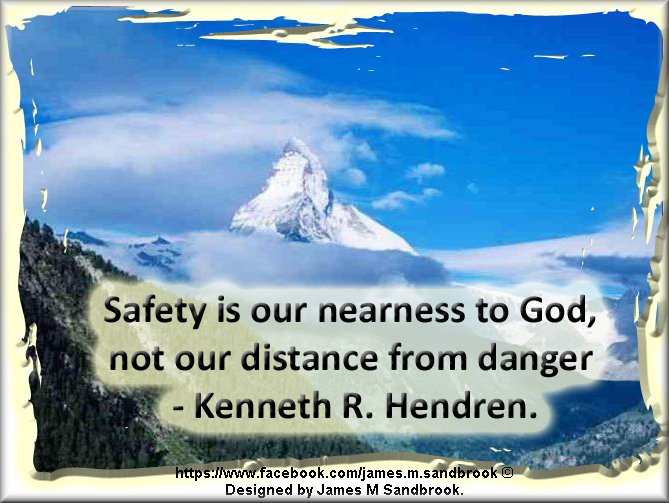
I always like the music of Seals and Croft. Just bought some of their songs, I had them on cassette, but now I got them digital.
I got:
Closer to you.
Diamond Girl.
Summer Breeze.
I’ll play for you.
Wind Flowers.
King of Nothing.
We may never pass this way again.
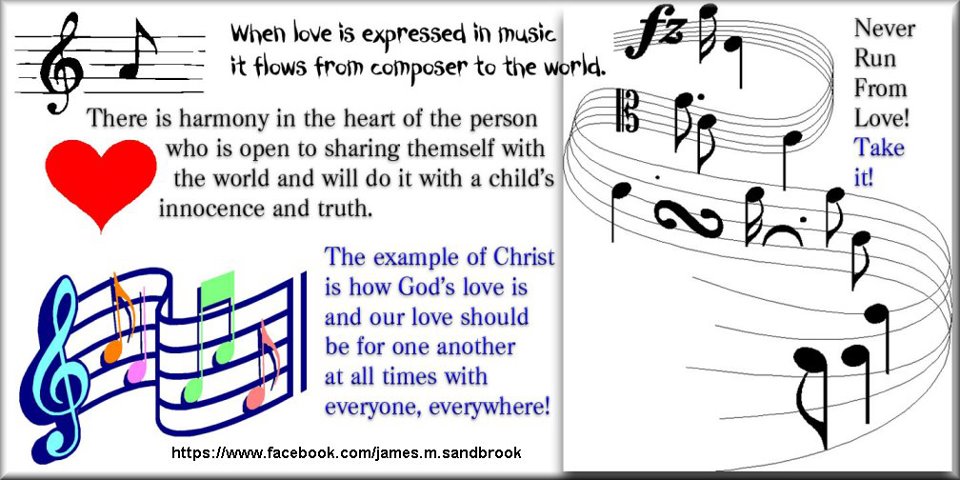
The people that the General Public think are Bad are often the hidden quiet & good, and are very misunderstood.

A lot of people feel that life was so miserable for them or that they never were able to fit in,
that it would be a wonderful world without them,
that people would be much happier without them,
that people would smile without them, and they feel that when they finally die the world will be a much better place
– because you see, logic dictates that in the mind of the person who has never known hope, love, fairness, compassion, and has only experienced those things when the other person was cruelly but not so obviously using them by being nice to them to get what they wanted out of them.
And one day the penny drops, so to speak, they get it, no one was a lover, friend, carer, or buddy unless they were after something that we were able to give them, they shadowed kindness, friendship and care because we had something that we could give and they wanted it, and so a few nice words, sex, cuddles, hugs and kind words and then they, when tired of us, walked away, and so we get it, we one day realize that every relationship was like that, all of them.
Some of us though, we can feel, “Hey, I want to be like them and take like they do.”
But each time we hurt someone we hurt ourselves, and eventually we realise that our conscience won’t let us continue like this, we can’t be like them, its too painful.
Being like this is heartbreaking, because we realize that we cannot be like the mean selfish people, our heart won’t allow it, or forgive us, and for each person who we hurt we hurt double back, we feel miserably guilty.
Then we either have a choice to be lonely, distance and misunderstood by others, or commit suicide.
So many of us, well we just exist, and yes we see the lovers, the doers, the people who take and take, and we know that we can’t be like them so we live as we can, and we try to avoid people because the people we avoid are like the people of the past who took advantage of us, and we just don’t want to go through that all over again.
At this stage we welcome death, we hope for it, we wish for it and we feel that when we finally die we will leave the world a better place because we are not in it anymore, because while we were in it people really didn’t care, didn’t like us, didn’t want us, that is why we live alone.
Recently a woman i know pointed to her neighbours house and said that, “A strange man lived there.”, yes he didn’t mingle with others.
Many people who kill themselves, or who die alone, or are judged as being weird for living alone, are in my own personal experience can be the most of gentle people who live in a world where they are heavily misunderstood, feared and disliked, and yes, they appear to the world grumpy and snappy, but thats to keep people away, because they found that when people were near them people hurt them, and they tired of being hurt, so they love their animals, they care for the homeless cats/dogs etc, , and they avoid the parasites, the humans that feed and take from the loving and gentle, because they know not how to love or care and we must not let the parasites near.
The parasites, the takers of the world, they may put the lonely down, but at least with them, we don’t share with them a bed, nor are they in our head.
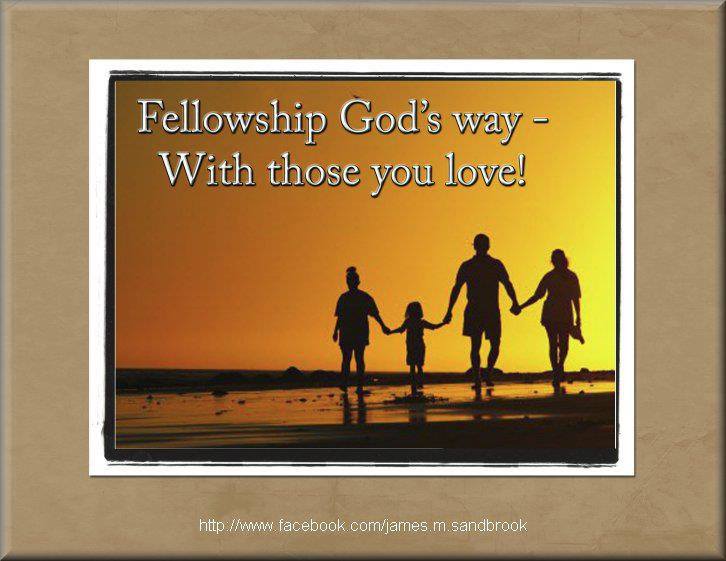
The point of interest is that possibly God is not trying to heal you, fix your relationships, sort your families out, but instead to gather the flock for the next world.
The final coming could be one of two things, one that it was designed by evil to make people believe that no one was coming to save the world after Jesus, or it was the final coming before the resetting of the planet.
Life being a journey must be experienced as a journey for it to have been of some worth and wisdom.
If we live in a house for ten years as my mother did, having done nothing but cater to her own desires and needs, she went nowhere, did very little, experienced little except watch TV, movies and such, thus the beginning of that ten years and the end of that ten years had no travel (Like what Alan Watts said about travel) – the reality is that mother hid herself under a bushel and the beginning of that decade was basically the end as the time in between had no value or worth to her and anyone else.
Our separation from the world, nature and so forth, is it our blind-belief in our intelligence being more powerful than that of all other living beings. “foolish pride”.
Instead of being hand-in-hand with nature, the animal, and the planets, we foolishly think that w are above it all and thus we can pollute, poison kill at will because we are the most powerful.
How does this end? Pride before a fall.
The normal of the human being is to see what is real from what we work out in our life. What appears before us we intellectually discern, discover, and even wonder about what we have before us that is a new discover, and with the wonder of a child finding a new insect we learn and then store what we learned away in our Soul Memory Banks.
If we are told from a young age what to see, believe in, know, understand and think, a large amount of discovery and wonder is take from us and we are denied the emotional feelimnsg that came from the discovery, such as being in class and told again and again fron year ot year about stick insects, we see video’s ovf them, maybe a documentary or two with a few stick insects and other insects and such, and then when we finally do climb a tree we see a stick insect, and yes, we are somewhat excited, but alas, nothing like the thrill and excitement of never having known that they existed and the joy of finding on, studying with our eyes of wonder what it does and then going home and asking our parents about what itr was that we saw.
As a child I did this a lot, I was always studying insects, animals, life, plants for the pure joy of each exciting discovery.
Today a lot of this is learned in a classroom on a screen. many children I have asked these days if they have seen a this and that and they say, “No!” as their minds are dulled by TV, movies, and electronic gaming, the outdoors and what it is to them is rather boring and of no use in a world that is insecure and most are indoors, in cars, and so on.
Metaphysics:
metaphysics
the branch of philosophy that deals with the first principles of things, including abstract concepts such as being, knowing, identity, time, and space.
“they would regard the question of the initial conditions for the universe as belonging to the realm of metaphysics or religion”abstract theory with no basis in reality.
– Oxford languages.
The Rewards of Being an Angel
by Richard Bauman

Once in a while we get to be an “angel” to a stranger. We get to touch a life gently and bring a little piece of serenity to someone in distress. It might be someone we don’t even know, whose name we won’t know, a person we aren’t likely to meet again. Isn’t that what God’s angels do? Don’t they show up at just the right moment, quickly grasp what needs to be done and then make it happen? And when the task is complete, they leave as directly as they arrived. I was backing out of a parking space at the supermarket one Sunday night. I glanced to the left saw a little lady standing there, close to my truck perhaps in her sixties. She startled me. My initial fear was that I almost ran over her. I realized she wanted something, and instantly I thought she might be a beggar looking for money. I rolled down the window and rather firmly said, “Yes?”
At first, in halting English, she asked me how to get to a nearby college. I tried to give her simple directions to the school, but then she said she was really trying to get to a friend’s house near the college. I re-parked my truck, turned off the engine and listened more carefully. She had been there once, she said, during the day, but at night all the houses looked alike. “Do you know the address,” I asked. She didn’t. I felt suddenly perplexed, agitated and a bit annoyed. How could I help her if she didn’t have the address? How could she expect me to give her directions? Then she pulled a piece of notepad paper from her purse. She had a phone number! And it was only then that she could tell me what she really needed—she didn’t know how to use a pay telephone. “How much does it cost,” she asked. “How do I do it?”
My agitation and tension evaporated. This I can handle, I thought, and then said, “I’ll show you.” There was a bank of pay telephones in front of the market. As we walked toward them, she apologized for being so much trouble. I tried, unsuccessfully I fear, to assure her it was no trouble. Then she frowned, how much would the phone call cost? I told her about twenty cents. She handed me a quarter. At the phone, she intently watched everything I did. In the receiver I could hear the phone ringing at her friend’s house. I became apprehensive again. What was I going to say when someone answered the phone? What if the person who answered the phone spoke only Japanese? What if no one answered? My apprehension grew as the phone rang and rang. Finally, someone answered the phone with a lively, “Hello.” “Please hang on, there is someone here who needs to speak with you,” I said to the voice that answered the phone.
Then I handed the phone over to the little Japanese lady. Even before she started talking to the person on the phone, she apologized to me for speaking Japanese to her friend. “My English isn’t good,” she said. After several minutes of conversation she looked at me, “She wants talk to you,” she said, with a tone of uneasiness in her voice. Tentatively, she handed me the phone. I talked to her friend, asked her for her address, and after she gave it to me I asked how to get there from the supermarket. Excitedly, she said, “You’re at Vons? I’ll come and get her. May I speak with her again, please.” I handed the phone back to the tiny lady. She listened intently for a few seconds, and then a look of relief swept over the her face. It was like a silent sigh. A few more words in rapid Japanese, and she was done. She returned the receiver to its resting hook. The tension was completely gone from her face. For the first time in the five minutes I had been with her, she wasn’t frowning with apprehension and concern.
And I realized, too, that my apprehension for her was gone. In front of the market was a table and chairs for public use. I asked her if she wanted to wait for her friend there. I offered to wait with her if she wanted me to. She said no, she would wait in her car until she saw her friend arrive. As I walked her back to her car, as she kept apologizing for “causing such trouble.” And I kept telling her I was happy I could help. And I truly was. When we reached her car I offered one more time to wait with her until her friend arrived. One more time she said she was now going to be okay.
Then she did something I never expected—she gave me a hug, and thanked me again for helping her. It wasn’t a simple, polite hug, but an embracing, loving hug. A sincere hug. A hug as full of emotion as it could be between two strangers. It was unexpected because I thought Japanese people were not so demonstrative. I had visited Japan a few years ago, and I perceived the Japanese as being quite respectful of personal boundaries, and touching a stranger without first asking permission just wasn’t done.
Perhaps I was wrong. Or perhaps she wasn’t so conventional. Whatever the case, it was a warm, wonderful experience. During the hug, after she again said thank you, I was able to thank her, too—thank her for asking me and letting me help her. It took courage for her to ask me for help. She couldn’t have known if I would be rude, angry, or impatient with her because she spoke broken English. For all she knew, I might have just backed out of that parking space and simply ignored her. Perhaps she has good intuition, or great trust that people will help when asked.
Perhaps she prayed for guidance. Whatever the case, a spiritual advisor, when I told her the story, pointed out to me that the little Japanese lady allowed me to “act like an angel” to her. I was the person who “just happens” to be in the right place, at the right time, and has the “answer” to another’s dilemma. And then, once the dilemna is past, moves out of that person’s immediate life. Of course, angels are never really gone because they are always remembered.
And I will always remember that little Japanese lady who didn’t know how to use a pay telephone, yet was willing to ask me for help. At that moment I had to wonder what joy and exhilaration I would have missed had I ignored this delightful and charming lady. Now, when I go into the supermarket, I not only think about the experience, I look around carefully. Is there someone near who needs an angel?
Prom Queen
It’s one of the most important nights in a young girl’s life

By Janet Martin
Keswick, Virginia
One beautiful Virginia spring night six years ago, Susan Poole stood in the middle of the Orange County High School field house. Hundreds of balloons arched and swayed over decorated tables, and lights glimmered overhead. The scent of fresh flowers overtook the usual smell of the varnished hardwood basketball court.
Susan thought back to her own high school prom. This would be her older daughter’s big night, which is why Susan, a middle school teacher, had been eager to help out with fixing up the field house. Just as she was about to leave, Susan heard sobs coming from the ladies’ room. She pushed open the door and found a former student of hers sitting on the floor, crying. “What’s wrong?” Susan asked. “I wanted to go to the prom so badly, Mrs. Poole,” the girl said. “But I couldn’t afford a dress. I snuck in because I wanted to see how pretty the gym looked.”
Susan helped the girl up. “You’re a junior, right?” Susan said. “Tell you what. Next year, I’ll make you a dress, and you will be able to go to the prom.” Jump ahead one year. The two meet for an afternoon fitting. Susan hits some rummage sales then goes to work on her sewing machine. A week later she delivers
the final product to the wide-eyed girl: a black crepe top with sequins and rhinestones and a red silk skirt, all refashioned from rummage sale finds. Word about Susan’s handiwork spread. She got phone calls from girls all over town who wanted to take part in proms and other special events but couldn’t afford a dress. Soon she was back scouring rummage sales and collecting everything from old bridesmaid outfits to discarded scraps of lace and taffeta. In her sewing room, these odds and ends were transformed. “Making so many dresses was time-consuming,” says Susan, “but it was worth it for the look on those girls’ faces when they got a dress.”
In 1999 Susan learned her mother had cancer. A few months later, her father started showing signs of Alzheimer’s. “My life came to a full stop,” she says. “I quit teaching and moved in with my mother. My husband took care of our girls. Fortunately, my mom lived just a block from the care center where my father was, and I found somebody to watch her in the afternoon while I visited Dad. I had no time left to make prom dresses, but I lent out what I had in my attic and found dresses at rummage sales that didn’t need much work.”
Susan’s mother passed on in June 2000, and her dad in April 2002. She got back to work at her sewing machine. Now Susan’s once again matching up needy girls with their dream dresses. “It keeps me busy,” she says. “And nothing helps with my grief more than seeing how happy a girl is when she knows she is going to the prom.”
This story originally appeared in the May 2003 issue of Guideposts.
The story of a girl and her best friend Obadiah
by Angela Marie Kelly
Cove, Oregon

Obadiah was one of the best friends I had ever had. It seemed like there wasn’t a place in the world that we didn’t go together. Oh, I loved him so much!
I live with my foster family on a farm in eastern Oregon. Sometimes when I look back on my life at all the things that have happened, I get real sad and lonely. But I could always count on Oby. He stuck by my side no matter what, and he’d listen to me when no one else had the time.
He was handsome. Sometimes I’d just sit and watch him run around the farm. He had black hair, long black eyelashes, black lips and big brown eyes that could melt your heart. I loved his eyes, the way they used to look into mine. He was just a dog, but Obadiah loved me, and even if he couldn’t tell me with words, his eyes told me everything.
On November 23, 1992, my real dad came up from Arizona to visit me in Oregon for Thanksgiving. He brought my younger sister, Jennifer, and my two little brothers, Matthew and Daniel. I was excited. Dad got into town late Monday night and decided to check into a motel and wait until morning to see me. My foster home is out in the country a ways, and Dad was tired.
We spent the whole next day together and I stayed the night with them at the motel. It was fun, but I worried about Oby; I knew he’d wonder where I was.
In the morning we decided to go out to the farm to do some bird hunting. When I got to the house, my foster dad was on the phone. He looked really worried about something and talked in a low, urgent voice. Finally, after I couldn’t stand it any longer, I interrupted and asked him what was the matter. He said my foster mom was at the hospital with my foster sister Amanda. Amanda had swallowed a penny, and the doctors worried about the way it was lodged in her throat. When I asked him if there was anything I could do, he told me to find the keys to the Blazer so he could leave right away when he got off the phone with the hospital.
As soon as he hung up, I handed him the keys and he rushed out the door. I was scared for Amanda, but I also had my dad and siblings to think about. I couldn’t abandon them. All I could do for Amanda was pray real hard.
Suddenly I remembered Oby. He wasn’t anywhere outside that I could see. When I didn’t find him sleeping in my room, I began to panic. I decided to call my foster dad on the CB radio. He was probably still on the property. Maybe he could tell me where to find Obadiah.
When I got him on the radio there was a long pause. He said he had to talk to me right away and that he was coming back to the house. In a minute he was there. “Angela,” he said, “I hate to be the one to tell you this ’cause I know it’s gonna hurt.”
I knew I didn’t want to hear what was coming next.
He finally got the dreaded words out: “Obadiah had to take the doggy wagon.”
“What?” I was upset. I thought they’d taken Oby to the pound. I couldn’t imagine what he’d taken to chewing on this time.
“No, Angela,” he tried to make me understand, “Oby took the doggy wagon to heaven.”
They’d let Obadiah out to run in the yard. Russell, an older neighbor, stopped by in his truck. Oby was chasing something and just ran right behind Russell as he was backing up. He accidentally hit Obadiah. In all the worry and excitement about Amanda, my foster dad hadn’t had a chance to tell me.
“I’m sorry, Angela. Russell says he didn’t even see him. . .” He kept talking but all I could hear was a distant mumble.
Finally it hit me and my chest felt as if it were about to burst. My foster dad held me. I could feel everybody staring at me, wondering what I was going to do.
Because I couldn’t stand the pressure and stillness of my life at that moment, I ran into the bathroom and yelled out in pain. Nothing had ever hurt so bad! I’d never had to deal with someone close to me passing away. Obadiah may have been a dog, but he was one of the most important members in my circle of love.
After a while my foster dad left for the hospital and my real dad knocked gently on the bathroom door. He came in crying and just wanted to hold me. Then he said that Jennifer and I needed to stay in the house while he and the boys buried Oby.
“You don’t want to see him like this, honey,” he said.
“Thanks, Dad, but I need to be there. I need to bury him. He was a part of me, and I have to say goodbye.” I said this with such confidence that I even surprised myself.
My family followed me to my room and silently watched me pull my boots on. I don’t think they knew quite what to say. Then we walked outside. The stinging winter wind whipped against our tear-stained faces. When we got to the big sheet of tin that covered Oby, Dad lifted it up and there lay my friend, all stiff and cold. I could feel my heart tear in half as I knelt to pet his soft ears. I whispered to him, “I’m so sorry, honey.”
Matt and Dad said they’d lift Oby. But I didn’t care how big my black Lab was, and I didn’t care if it would almost kill me to carry Oby to his grave, I was not letting anyone else touch him. I said a silent prayer to Jesus and he gave me the strength to carry my dog out back behind the barn. I didn’t even have to stop.
When we got to the spot near a patch of blackberry bushes where Oby used to like to play, I laid him down and ran clear back to the house while Dad and my brothers started digging.
My room was cluttered with all my belongings, but without my dog it felt empty. I got the socks he chewed on, his old collar, some beef jerky treats, a couple of bones he’d hidden away and a special cross that an old lady had knit for me. By the time I got back to the spot, Matt and Dad were done digging. I stepped down into the hole and pulled Oby in. I put his collar on him and wrapped the knitted cross around it. I put the rest of his belongings at his feet. Then I knelt and kissed his shoulder. I began singing “Jesus Loves Me” and everyone started bawling. Then I covered Oby with dirt and asked if we could bow our heads. “Dear Lord,” I prayed, “please take my dog. Take good care of him. I just want to thank you for all the good times I had with Obadiah, but now he’s yours. Amen.”
Dad and my siblings went back home to Arizona the next day, Thanksgiving. Amanda pulled through just fine. But for a while afterward I felt as if I were dead.
Then the old lady who had knit the cross for me told me about a golden Lab retriever pup in town, and I got her. I named her Little Anne, and she’s the sweetest thing you ever did see. Russell, who felt just terrible about what happened, gave me a nice card and some money to help me buy the things you need for a new dog.
It’s hard to start over, but I’ve got faith. I think I may have planted some seeds with my siblings too. I hope they got to see the love of the Lord working through me in my hard time.
The greatest blessing was having my family with me when Oby died, and learning to be thankful for what I do have even when I’ve lost something wonderful. The same day I went to get Little Anne, we stopped at a store and I put some money in the Salvation Army bucket. The lady ringing the belt gave me a card that read, “For those that grieve, God gives beauty instead of ashes, gladness instead of mourning, and praise instead of despair.”
It was perfect! It was from God.
The above article originally appeared in the February 1994 issue of Guideposts.
“I am a Stay-at-Home Wife”
By Lanier Ivester – Aug 12, 2004, 09:55

“So, what do you do?” The question is posed relentlessly. In other words, “What label have you given yourself to prove to the rest of the world that you are not a drain on society?”
During my single years I had a lot of creative answers to that question: “I am a ballet teacher.” “I work at an old and rare bookstore.” “I am a student.” “I teach piano lessons.” Those years were ripe with opportunities to invest in other lives, to develop skills for the future, and to discover the calling for which God had uniquely designed me. During my five-month engagement, I quipped lightly, “Why, I am a bride!” Most people were amused by that, but I was serious. I saw it as a calling, and a very sweet one, at that.
I was spending every waking hour preparing, not just for my wedding, but for my husband. There was painting to be done and flowers to be planted at my new home where we were planning to hold the reception. There were the invitations to address and the endless decisions about cakes and bouquets and bridesmaids dresses, and although I had been mentally planning my wedding from the time that I was sixteen, I still had a lot to do. But far more important than any of that, I was getting ready to be a wife, and the vocation was so appealing and precious that tears would spring to my eyes at the very thought, and I would sometimes call Philip at the office with a little whispered entreaty: “Can’t we just elope…today? Right now?”
We had been married only six months or so when we attended a wedding of one of my husband’s friends. I found myself sitting at a table with an old acquaintance of his, a young single man. I awaited the inevitable. When the question finally came, I smiled brightly and squeezed my husband’s hand. “I am Philip’s wife,” I said, with all the pride in the world. His eyes widened, but not with the censure I had anticipated. He shook his head in a dumbfounded manner, and said, “Well, then
Philip is a lucky man.”
I knew from the very beginning that Philip would love for his wife to be at home—not that he would require it, but that he would revere it, and that knowledge only solidified my unswerving conviction that he was the one God had for me. He had thought about it, and that was what he was looking for. But what man, in his inmost heart, wouldn’t admit that it would be nice to come home at the end of a long day to a good, hot meal; a pretty, clean house; and a woman who has given a little attention to her appearance? I realize that I am generalizing a bit, but if I am, it is on matters that basic biblical principles presuppose. “But let the older women teach the younger women to…love their husbands…to be keepers at home…” (Titus 2:4,5).
According to Strong’s Exhaustive Concordance, the word “keeper” means literally a guard, a stayer at home, one who is domestically inclined. We women are gatekeepers—no matter what battles are raging in our culture, we have been entrusted with the culture of our own homes, a culture within which tremendous ministry can take place, both to our families as well as the ones God brings into our lives. And for me, even though He has not blessed us with children yet, that is a full-time
job. Once people have regained consciousness after I tell them that I am a stay-at-home wife, they usually say something like, “I wish that I could afford to do that,” or “What on earth do you do all day?”
There is no reply that will satisfy those who have already made up their minds that I am throwing away my life, or at least any potential for significance. But I was once asked by an older woman who was a stay-at-home mother of 11, “What do your days look like?” which is a much more intuitive question. She did not assume for a moment that just because I had no children at home my days were not filled with meaningful tasks.
We ladies need to reassess our motives in what we do. All that we do—from the housewife who is so occupied with her children that her husband goes to work with buttons missing off of his shirt, to the newly-married career woman who feeds her man on frozen dinners and take-out food. We were created by God to be a helper suitable. In other words, we are designed by God to be precisely what that man—that we have vowed before Him to love, honour, cherish and obey—needs. Such an
understanding of the glowing realities beneath the surface of life exalts tasks like ironing his pants and packing his lunch and making his home beautiful to a place of honour, as far removed from the idea of subservience as the sacred from the profane.
I think that it is a shame that the old-fashioned custom of a wife being called by her husband’s name has gone by the wayside. What a symbol of pride and possessiveness—I am his! Mrs. Philip Ivester—he has given me his name, in very much the same way as our Lord has given us His. We are Christians—”little Christs”—not just people who believe in Him, but people who belong to Him. We don’t lose our identity in assuming such a handle; we accept it gratefully, joyously, knowing the new life within us for which it stands.
God often changed people’s names in the Old Testament as an outward sign of His ownership of them. They were not less themselves, but more—in all the abundance and freedom of God’s calling. If we are wives, it is a symbol of the fullness of our womanhood to be so named. I have been approached on two separate occasions by widows who thanked me most earnestly for addressing a letter to them using their husband’s name. These women were still proud to be identified with their men—and touched deeply that someone had proclaimed it in such a simple, commonplace way.
I am not a homemaker because I had too little ambition or education to make anything else of myself. No—I am a homemaker because God has given me the infinite honour of being a wife, and I delight in employing every ability that He has equipped me with in this glad career. I love being home. I love being intimately familiar with each creaking floorboard and each pattern that the sun makes upon the walls as it travels across the backyard. I love making bread and tending my garden and caring for a small menagerie of cats and chickens and a dog who thinks he’s human. But most of all, I love the happy look that I see on my husband’s tired face when he comes in at the end of the day. And I cherish the fulfillment that the Lord gives me in all of these things. Indeed, “my borders enclose a pleasant land”. (Psalm 16:6)
I am not saying that no married woman should supplement her husband’s income. I am only urging that she be sure of her calling. Too many women jump to some rather unfortunate conclusions when it comes to the concept of homemaking. They seem to associate it solely with child-raising, forgetting that in his divine order the Lord calls us to be wives before He calls us to be mothers. It is a wonderful thing to encourage women to be at home with their children, and I applaud those who have made sacrifices of their careers in order to invest in eternity. But we should be promoting the vocation of wife just as much, if not more, for the marriage relationship is the foundation of all family life. For the childless woman, home can still be a fulfilling place, as I have learned in waiting on God to bless us with little ones. To be sure, there may be less time for the tending of roses, but I think that the nursing of little rosebuds will be a fair exchange.
The Blue Bowl
All day long I did the little things,
The little things that do not show;
I brought the kindling for the fire,
I set the candles in a row,
I filled a bowl with marigolds—
The shallow bowl you love the best—
And made the house a pleasant place
Where weariness may take its rest.
The hours sped on, my eager feet
Could not keep pace with my desire.
So much to do! So little time!
I could not let my body tire.
Yet when the coming of the night
Blotted the garden from my sight,
And on the narrow graveled walks
Between the guarding flower stalks
I heard your step, I was not through
With services I meant for you.
You came into the quiet room
That glowed enchanted with the bloom
Of yellow flame. I saw your face;
Illumined by the firelit space,
Slowly grow still and comforted—
“It’s good to be at home,” you said.
~ Blanch Bane Kuder
© Copyright 2002-2005 by LAF/BeautifulWomanhood.org
Why You’re A Target!
By this I know that You are pleased with me. – Psalm 41:11 NASB
By this I know that thou favourest me, because mine enemy doth not triumph over me. KJV.
Satan doesn’t want you to know that the favour of God is upon you, that you’ve been blessed by Him and given all the good things you enjoy. Actually he doesn’t want you to think that God’s done anything for you! His lie is that you’ve no purpose, no power and no potential. To convince you he’ll play the race card. If that doesn’t work he’ll play the childhood memories card. Finally he’ll resort to reminding you of all the broken promises and shattered dreams. If you buy into it you’ll have such low self-esteem that you won’t believe God has blessed you in any way, or that you have any real possibility for success in life.
Understand this: no matter how limited your ability or lack-lustre your accomplishments are to date, you don’t have a thing God didn’t give you. Your blessings have been made possible only because the Lord is on your side. Listen: “By this I know that You are pleased with me, because my enemy does not shout in triumph over me. As for me, You uphold me in my integrity, and You set me in Your presence forever” (Ps 41:11-12). David understood that his enemies were attacking him because they could see the favour of God on his life. Do you understand that too? If you don’t, you won’t expect the attack, understand the reason for the attack, or know how to respond to the attack. You’re blessed, that’s why you’re a target! They’re jealous because of what God has done for you. How come they see it, but you don’t?
SoulFood Bible Readings: Num 29-32, Matt 5:33-48, Ps 44:17-26, Pr 11:12-13